We’ve all heard the saying, ‘Time heals all wounds.’
The phrase rings true because so many stories, and the people within them, are lost to time immemorial. Almost every seminal baseball figure of the 19th century has vanished from public memory. They were once household names throughout rural America, but now their stories are hidden away in dusty books, newspaper clippings and verified records.
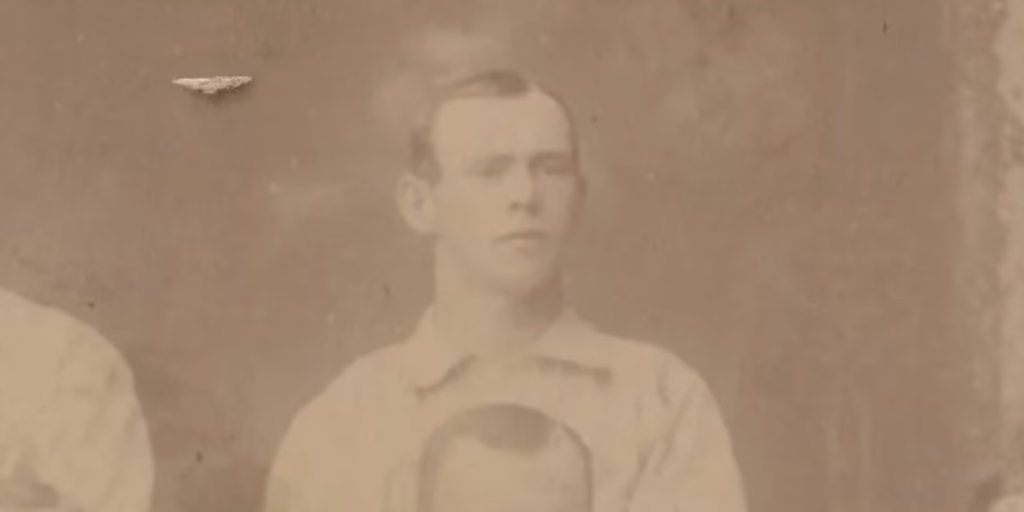
The player most deserving of recognition from Hartford, Connecticut, was John “Jack” Gunshanan, also known as “Gunny” and “Mayor Jack.”
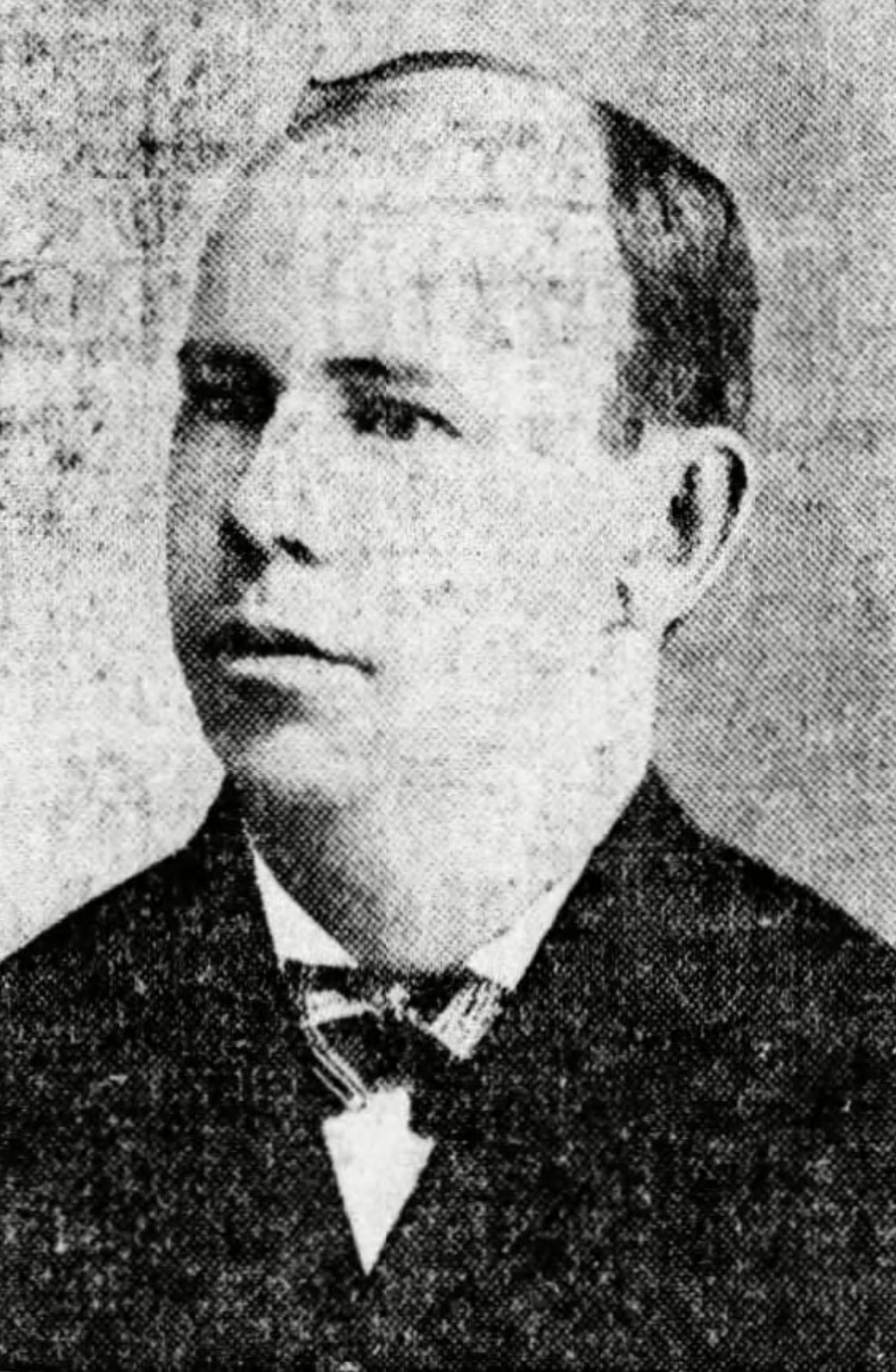
Born on May 17, 1868, John Francis Gunshanan (also spelled “Gunshannon”) was a second generation Irish-American, and one of twelve children. Young Jack had a grade school education and untapped abilities.
His mother, Elizabeth, could read and write—uncommon skills among immigrant women in New England at the time. His father, James, worked as a porter, a profession associated with the working class.

The Hartford directory listed Gunshanan as a printer’s apprentice from 1883 to 1885, but he chose the basepaths. He played professional baseball for over a decade, highlighted by his years with the Hartford Base Ball Club.
Post career, he attended to the plight of factory workers and their families. He became a community leader and a spokesperson for Hartford’s wage workers, which led him to serve as a State Commissioner charged with eradicating the tuberculosis epidemic.
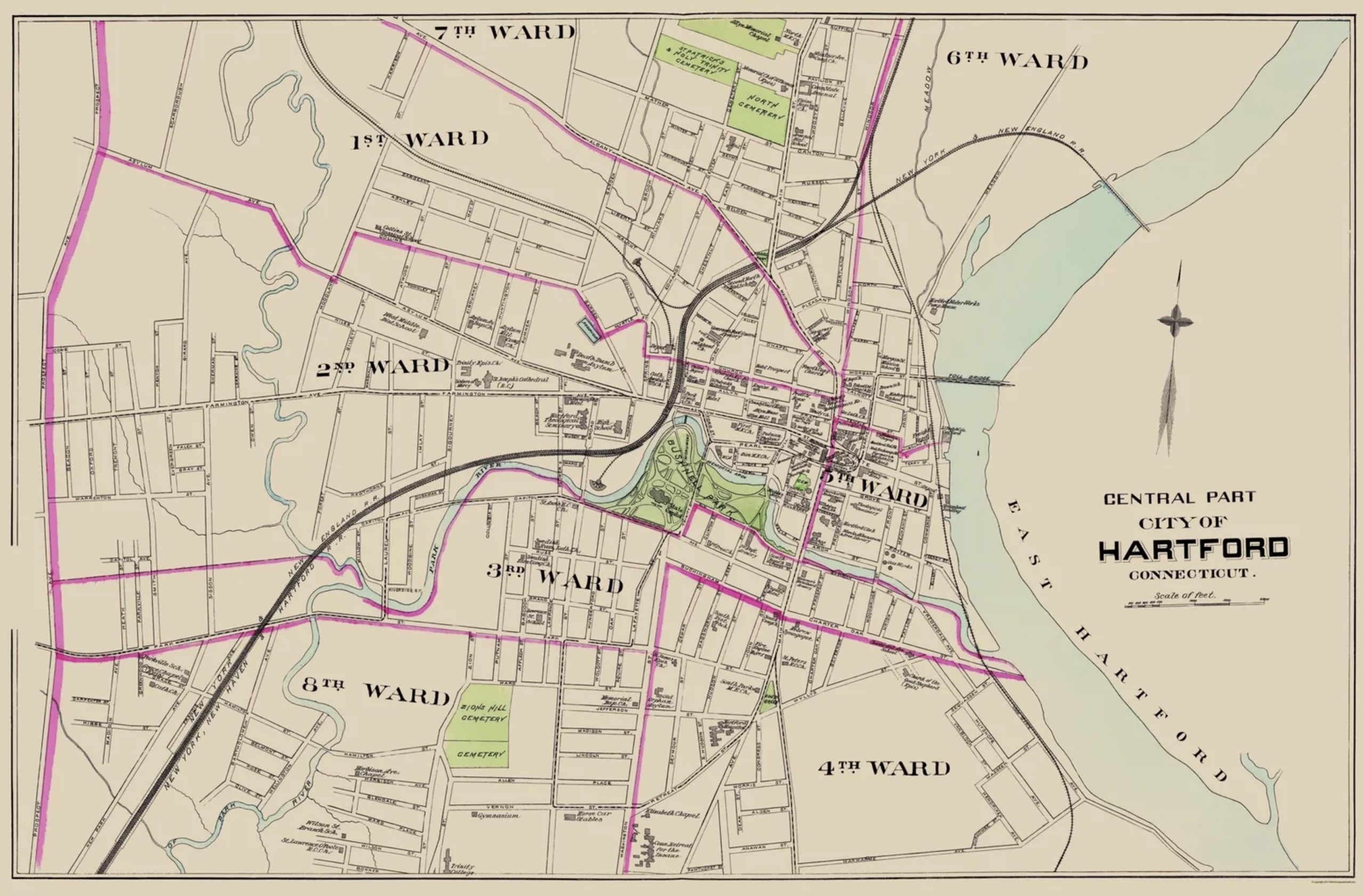
From 1886 to 1897, city records listed him as a baseballist. His bat and ball journey began like most boys in Hartford’s Frog Hollow neighborhood, competing in the sandlot with peers at Ward Street Grounds.
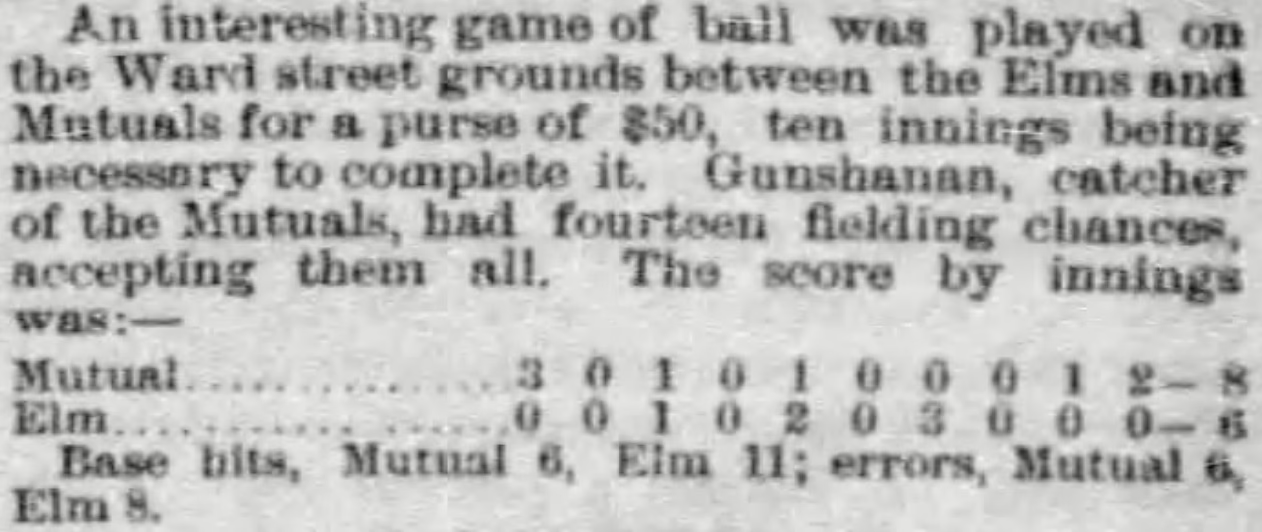
Gunshanan stood as catcher for the 1886 Hartford Mutuals in his first season of record. His teammate Steve Brady, was the former captain of the New York Metropolitans, 1884 World Series Champions, yet Gunshanan was captain of the Mutuals and likely established the team.
Prize money was common back then, and in a well-attended contest against the New Haven Elms on September 26, 1886, Gunshanan’s Mutuals split fifty dollars in winnings.
The following year, he larked for the Hartford Mutuals and a club in Pittsfield, Massachusetts. Then the Hartford Courant announced his signing with Allentown of the 1888 Central League.
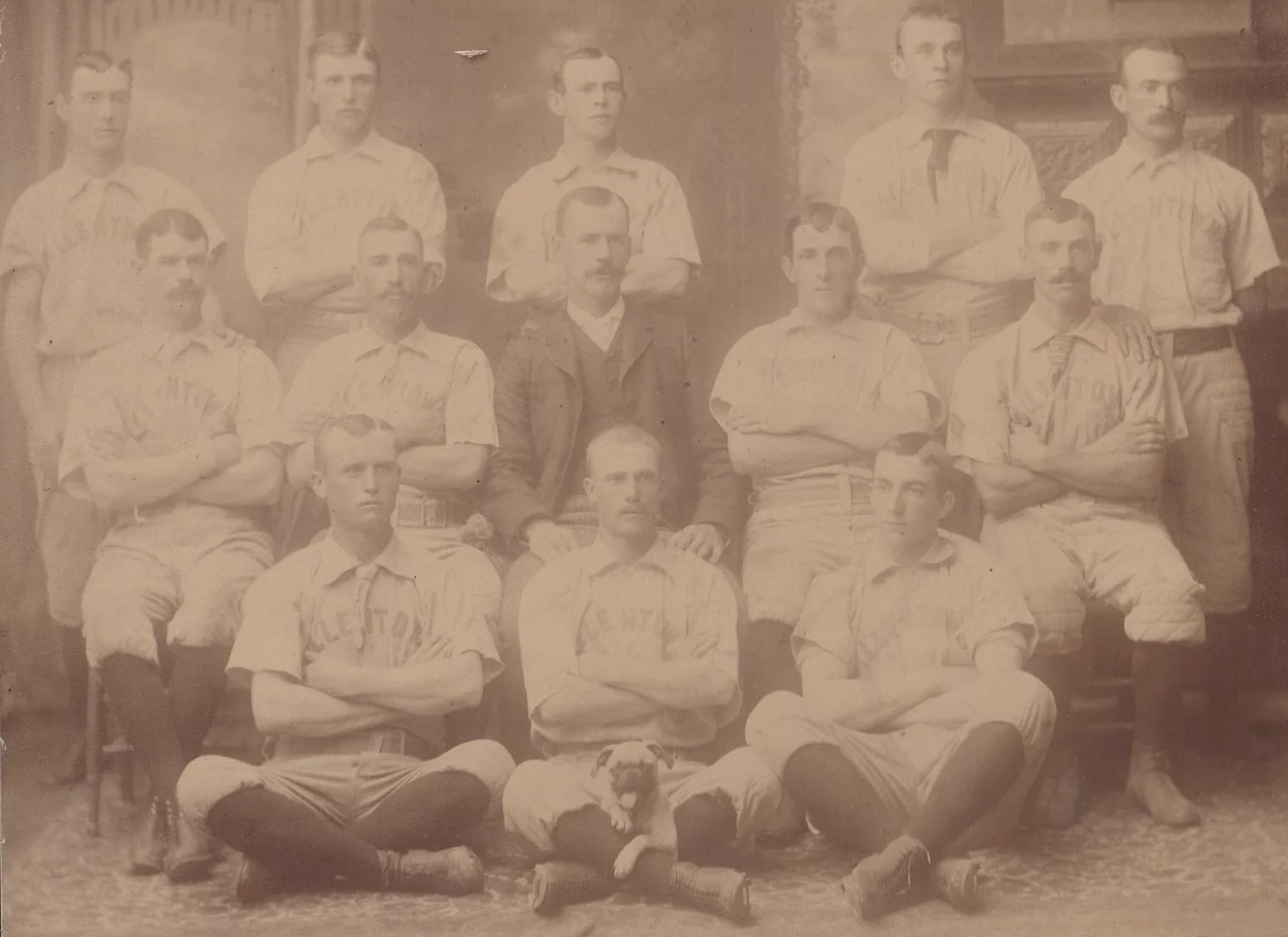
He was primarily a catcher, but Gunshanan mostly guarded right field for Allentown. His manager, Fergy Malone, was a former big leaguer, a Civil War veteran, and a fellow Irish-American.
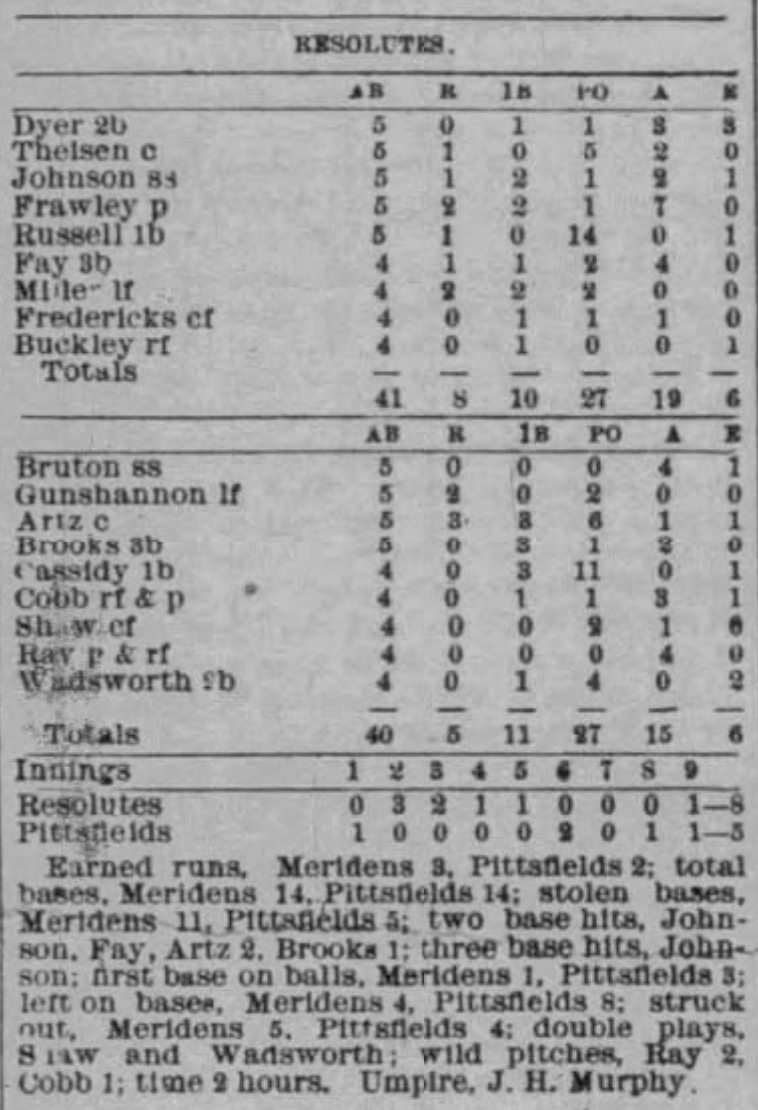
Allentown performed terribly, but Gunshanan batted well enough to ink more contracts. He moved on to Wilkes-Barre, Pennsylvania, and then to Lowell, Massachusetts of the Atlantic Association.
During off seasons, he led Hartford’s indoor baseball club, and arranged an ice polo league—a precursor to ice hockey. Gunshanan’s hometown connections proved valuable, as he joined old Hartford teammates, Jack Remsen and Eugene Derby, in Troy, New York, for the 1890 New York State League.
At 23, Gunshanan was already a veteran player described as a “clever little outfielder” with soft hands and above average hitting ability. He ascended to captain of the Albany club in the 1891 Eastern Association.
One day, in a twist of fate, he stepped into the batter’s box against Providence and took a swiftly pitched ball to the forehead. Some newspapers mistakenly reported his death, but instead, Gunshanan had a serious concussion. He returned ten days later, though the blow seemed to slow his baseball activities.
Perhaps he was seeking to join the Connecticut State League, which failed to organize in 1892 and 1893, but Gunshanan did not appear in another box score until 1894. While staging a comeback to the diamond, he married a woman named Margaret Nolan, and together they raised five children.
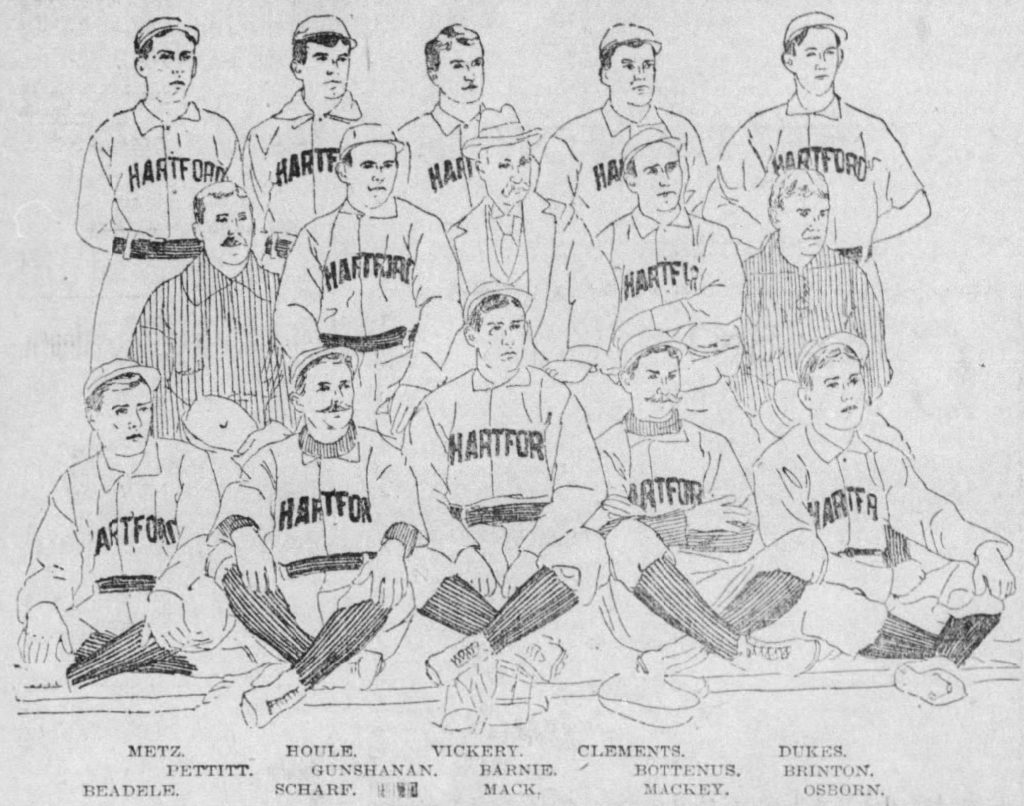
Gunshanan roamed the outfield for a popular team known as the Hartford Bluebirds from 1894 to 1896. Reportedly, he had disagreements and shouting matches with his player-manager John Henry. Hartford fans adored Gunshanan anyway.
In 1896, with an experienced roster and a new ballpark built at the direction of Manager Billy Barnie, the Bluebirds finished second in the Atlantic League.
Likely persuaded by a higher-priced contract, Gunshanan relocated to Waterbury for two seasons under Hall of Fame player-manager, Roger Connor.
Gunshanan was a well-known entity among most baseball fans of the time. In a cold and rainy game against Hartford, he was bestowed with fifty dollars by appreciative Waterbury fans for his “gilt-edged” play on a wet surface.
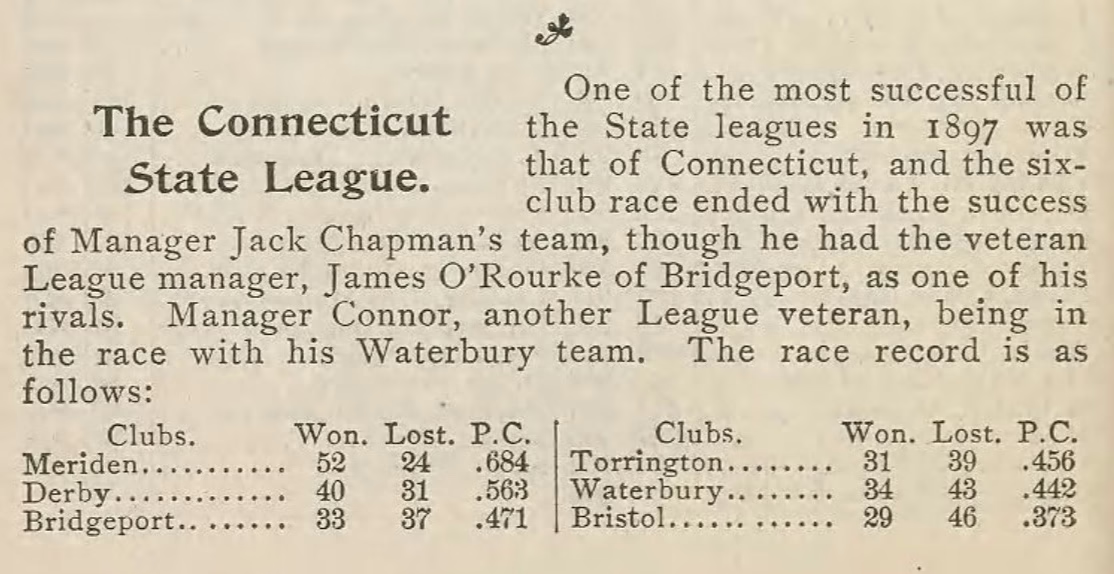
Though he hinted at retirement, he accepted a role as player-manager for the 1899 Bristol Bellmakers of the Connecticut State league. Manager “Gunny” turned out to be a fiery motivator. In a contest between Bristol and New Haven, he took a punch to the face by an umpire while arguing a stolen base.
This fiasco, along with Bristol’s losing season, prompted Bellmaker fans to demand his dismissal. Posters reading, “Gunshanan is out of it!” were plastered downtown Bristol.
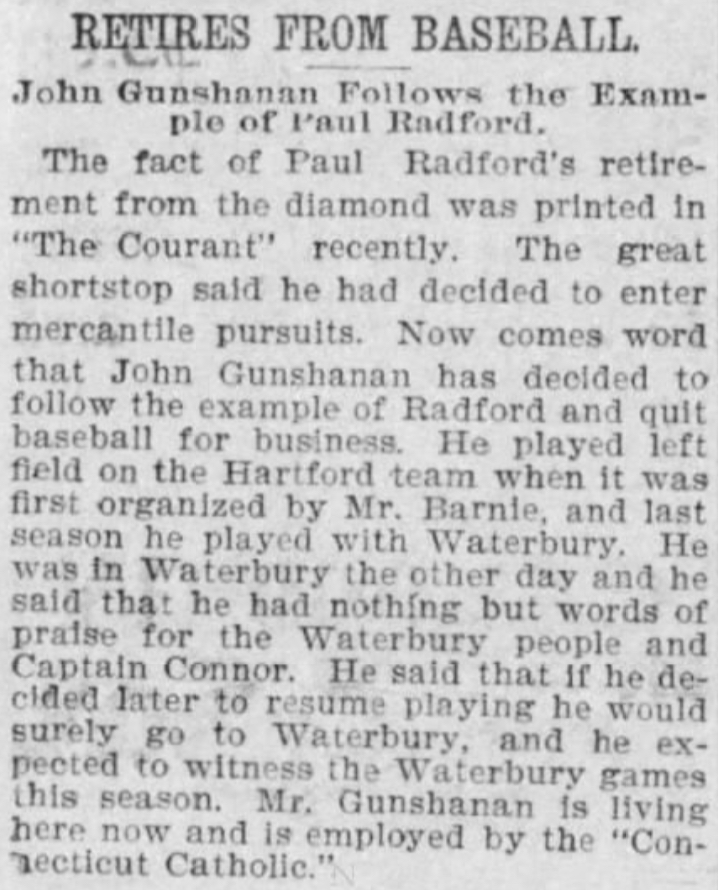
Gunshanan sold his stake in the Bristol club and retired from the field a second time, stating:
“I announced several months ago that business would prevent me from taking an active part in the game the coming season, and I generally mean what I say. I would like to see Hartford in the State League, although the New England league would be preferable. As a lover of the sport I hope to be an interested spectator at the games in Hartford; further than this I desire no connection with the club.”
John Gunshanan, March 22, 1900.
His involvement in the game continued as a part-time umpire, but teams were not enthused about his calls on the field. He stepped away from subpar umpiring to become an unofficial representative of the Hartford Baseball Club.
He helped Billy Barnie, owner and manager, find investors to enter the 1900 Eastern League. Reporters clamored over Gunshanan’s baseball insights and excitable post game commentary dubbed as “Gunny’s Sharp Shots.”
“Bristol has a fair team but the game I saw them in New Haven, they could not hit a basket of eggs with a sledge hammer.”
John F. Gunshanan, June 15, 1900.
When his baseball career ended, Gunshanan worked as a reporter for the Connecticut Catholic newspaper. His political ties would lead him to various charitable and civic vocations.
Gunshanan used his baseball fame to advocate for Hartford’s factory workers; his Frog Hollow friends and neighbors. He founded the Workingmen’s Free Reading Room Association, an educational club with subscribers which hosted lectures and rallies.
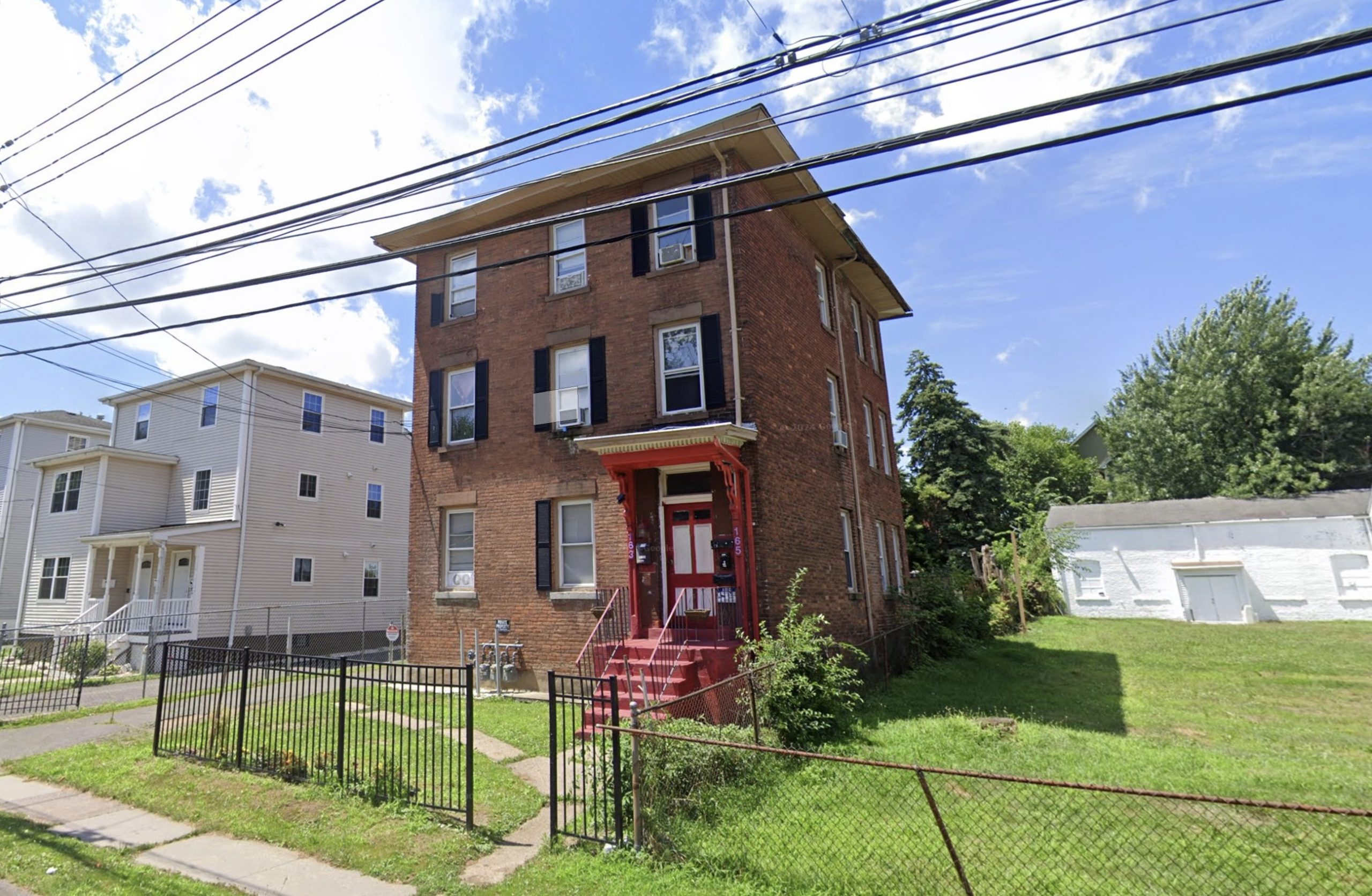
His family of six lived on the third floor of 17 Affleck Street (now 165 Affleck Street) located in the center of the factory district and across the way from his parents. On the two floors below were two other families.
Because of his hyperlocal popularity, Gunshanan earned the moniker, “Mayor of Frog Hollow.” Together with his politically ambitious brothers, James, Thomas and Michael, the Gunshanan family held significant influence over Democratic Party politics in Hartford’s Eighth Ward.
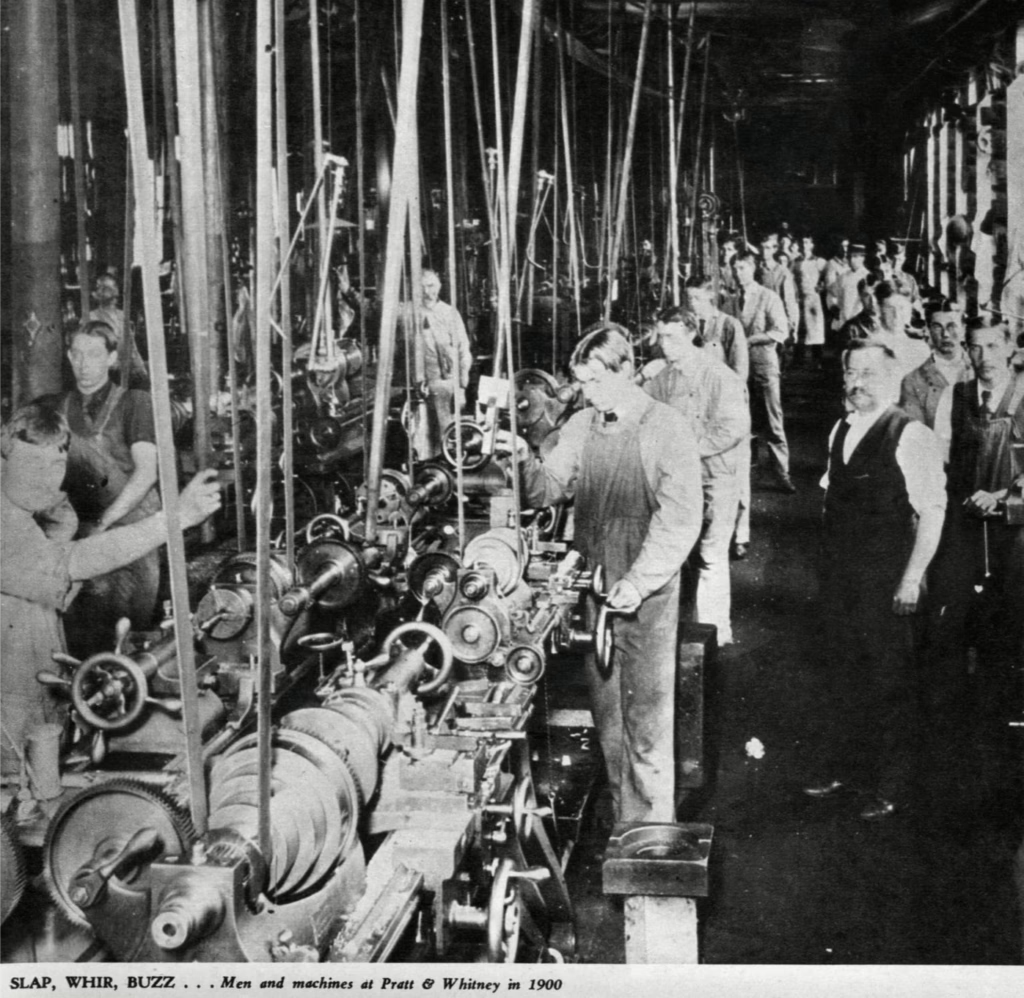
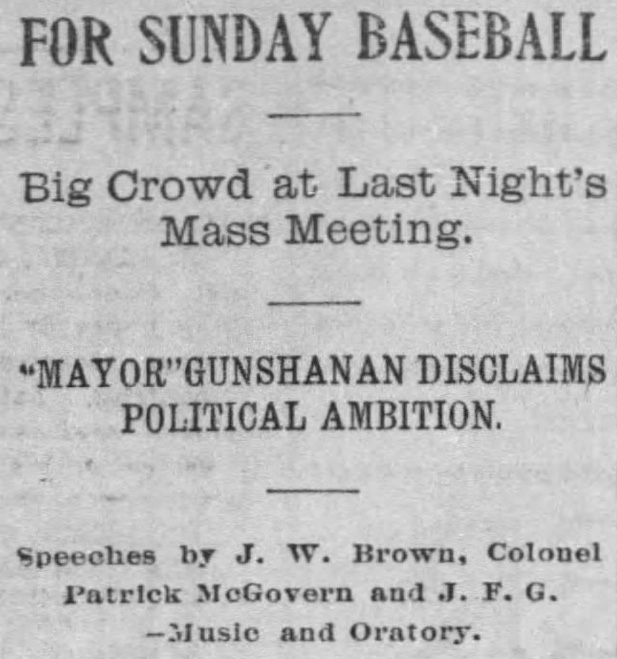
Gunshanan never wanted to run for political office. He could already influence change at the grassroots. In 1901, “Mayor Jack” pushed for workingmen to play baseball on Sundays; an outlawed practice at the time. He spearheaded a petition, joined by hundreds of residents, urging Mayor Alexander Harbison to allow Sunday baseball at Pope Park.
Gunshanan believed in outdoor recreation for laborers with grueling, six-day workweeks. He promised no gambling or drinking if the Mayor would only agree. The measure wouldn’t pass until years later, but Gunshanan and his supporters were first to get the ball rolling on Sunday ball in Hartford.
Then in 1902, Gunshanan sat on a committee to welcome President Theodore Roosevelt during his tour of New England. The president arrived in a Hartford-made electric automobile and spoke to a crowd of nearly 6,000 at Pope Park. He emphasized the value of labor and voiced appreciation for the toil of wage workers.
On behalf of the Workingmen’s Club, Gunshanan and Reverend Michael A. Sullivan of Immaculate Conception, presented to President Roosevelt a horseshoe-shaped bouquet of flowers, an Irish symbol of good fortune.
“Father Sullivan, I am awfully pleased. Mr. Gunshanan, I thank you. I am paid twenty times over for my visit in this reception you have given me.”
President Theodore Roosevelt, 1902.
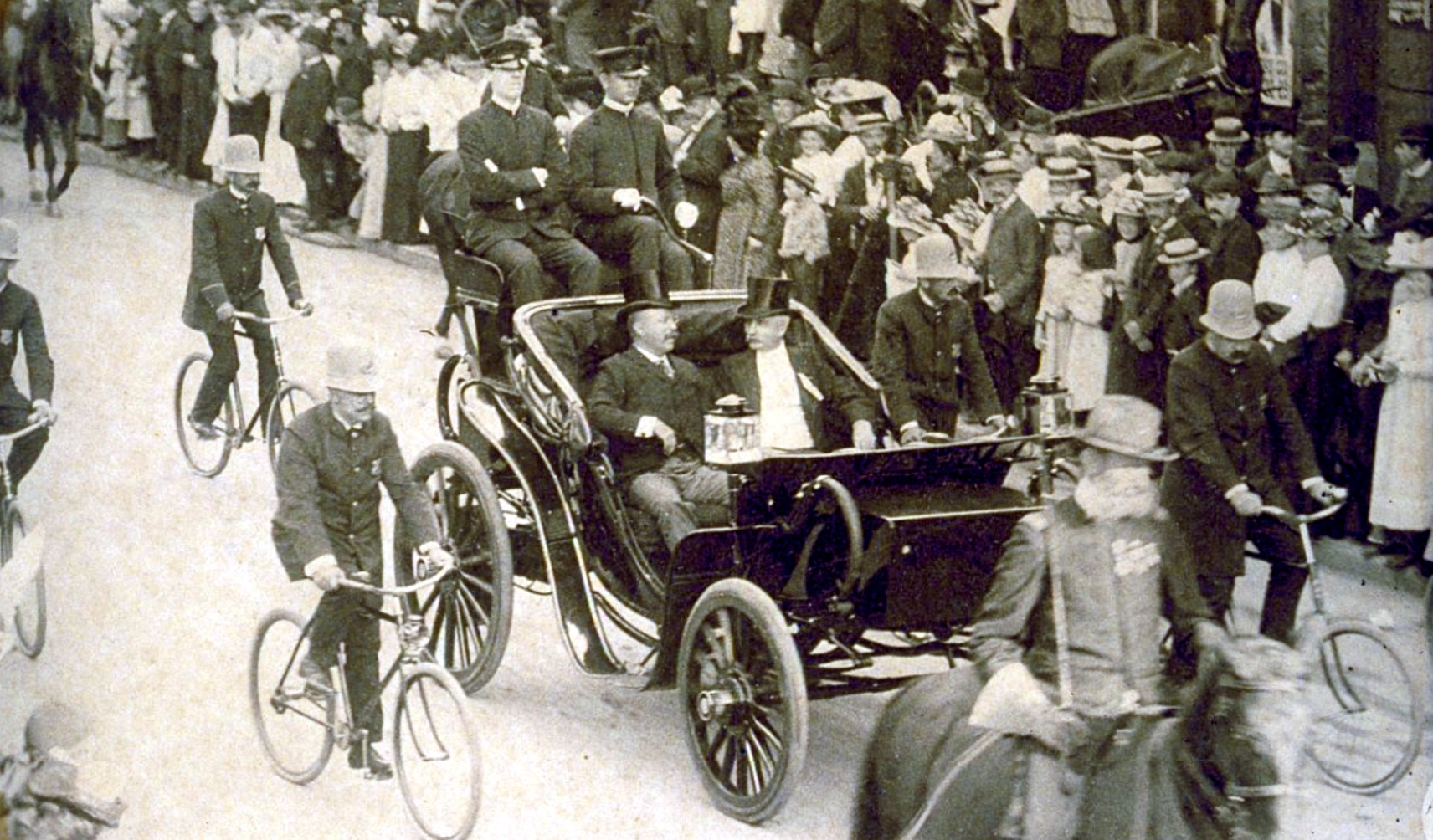
Later that night, the Progressive Era president remarked:
“In being driven around your beautiful city, I was taken through Pope Park, and stopped at a platform where I was presented with a great horseshoe of flowers, the gift of the workingmen of Hartford to the President of the United States…it was a gift of welcome from the wage workers, upon whom ultimately this government depends.”
President Theodore Roosevelt, August 22, 1902
Roosevelt’s visit pushed Gunshanan deeper into the public eye and public service. He began making speeches favoring the industrial class, while endorsing political candidates who did the same.
Gunshanan spoke of a growing harmony among the capitalists and laborers and a blurring of the two classes. As manager of the newly named West Side Workingmen’s Club, he became a spokesman and fundraiser for the plight of factory workers.
So when an epidemic of tuberculosis presented a major crisis in New England, Gunshanan shifted his attention to public health. He recognized that wage workers were at greater risk of tuberculosis, also called consumption or the White Plague. Daily toil in cramped factories led to high rates of infection and other ailments.
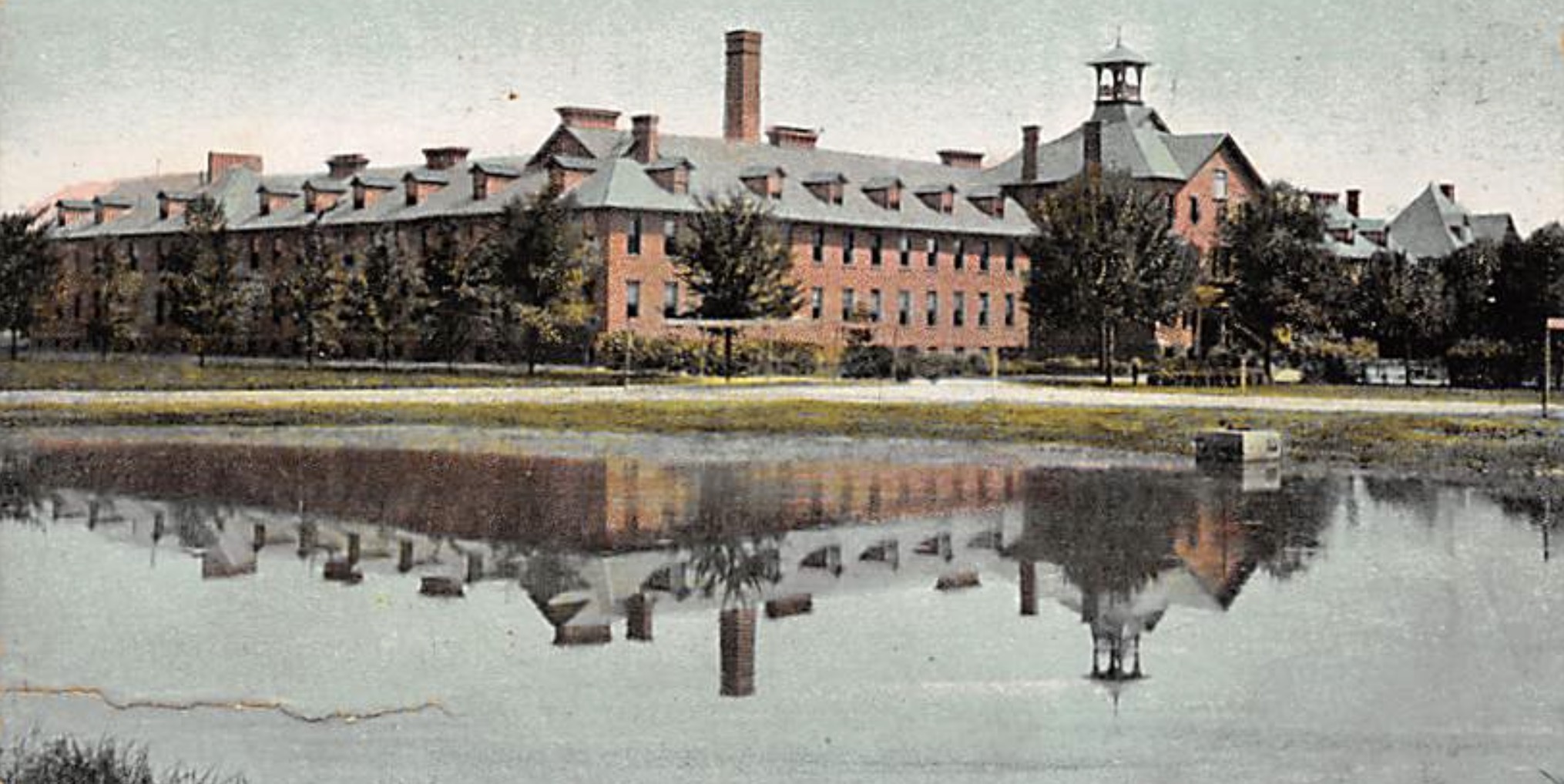
Before sanitoriums, Hartford’s terminal patients were usually sent to the Almshouse, where subpar conditions were widely known. The Gunshanan family and other leaders in Hartford advocated for a new facility: the state’s first medical center specializing in tuberculosis treatment.
By 1905, Gunshanan and a network of factory employers and employees raised $6,500 for Wildwood Sanatorium, also known as Cedar Mountain Hospital. Connecticut’s General Assembly followed suit with a $7,500 appropriation.
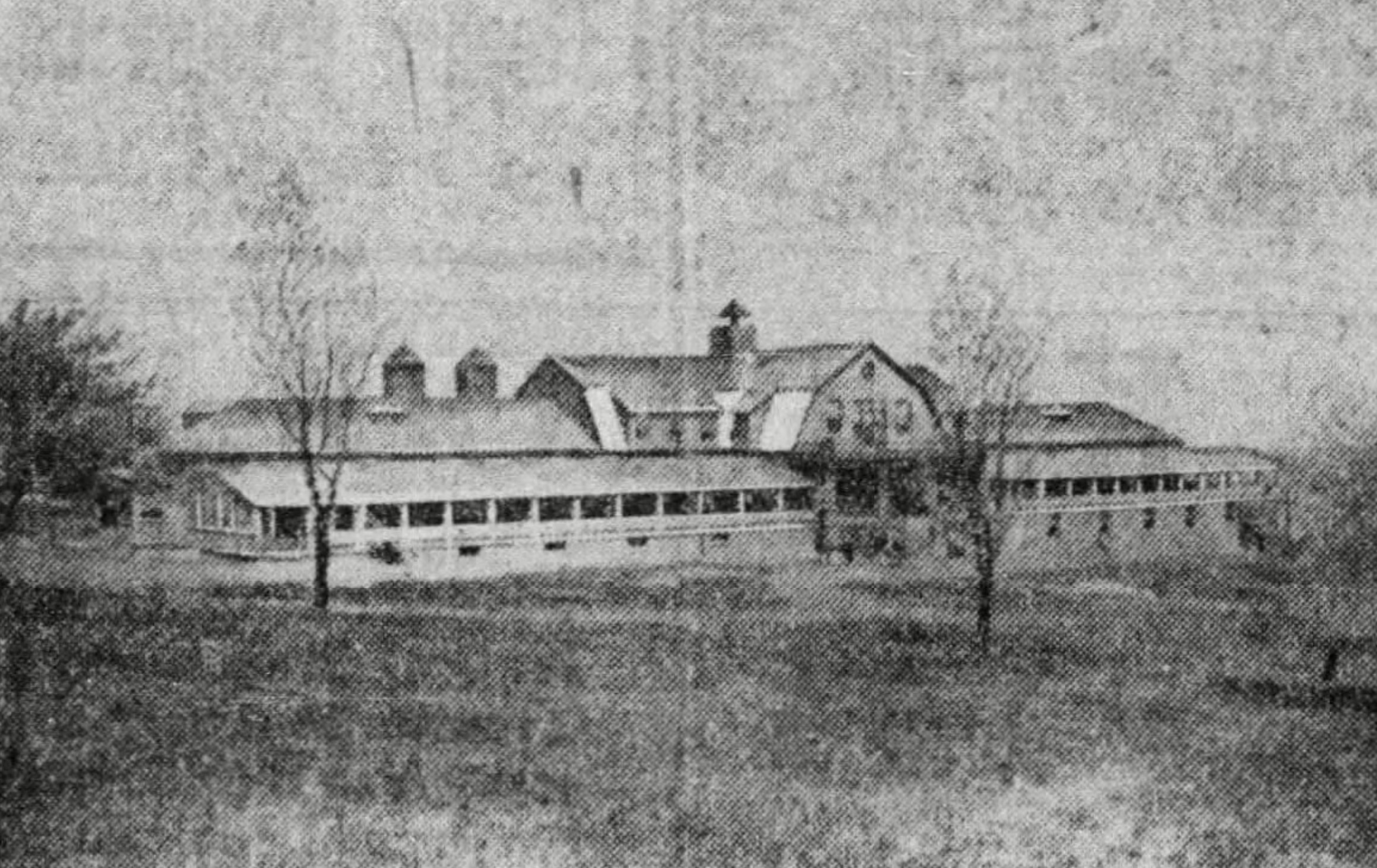
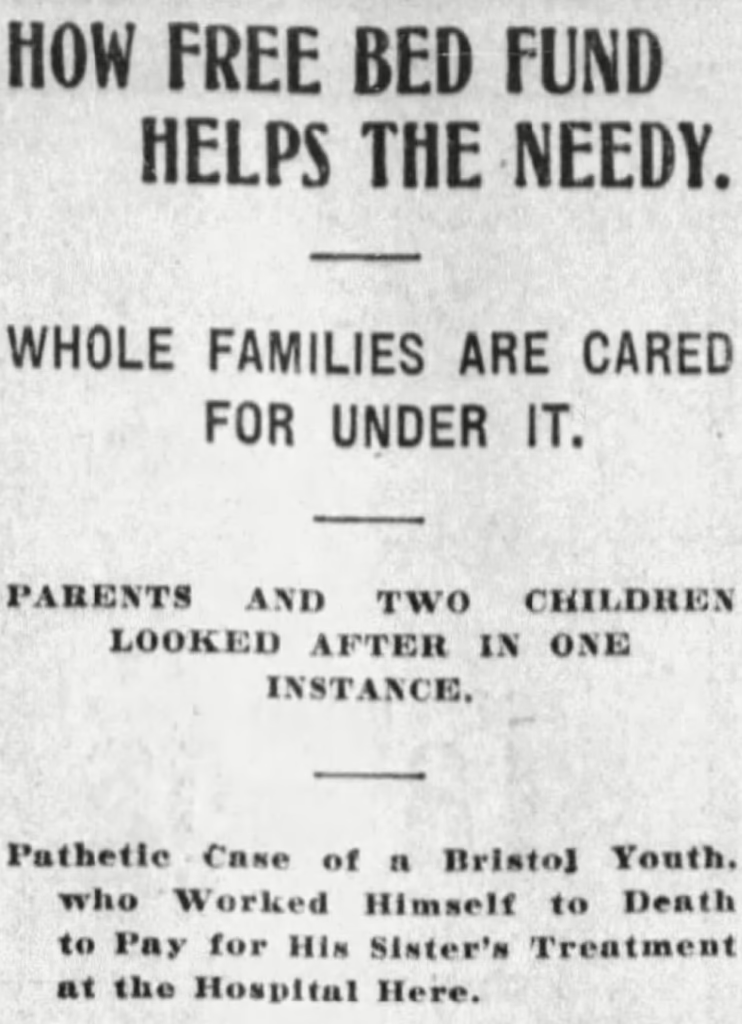
With help from the his brother Michael, Hartford’s Inspector for the Board of Charities, Gunshanan orchestrated “The Free Bed Fund” on behalf of the West Side Workingmen’s Club.
The fund received small donations for the care of tubercular patients or a whole family of patients, who would have their bills paid in full. The Workingmen’s Club had multiple representatives in every city ward collecting donations.
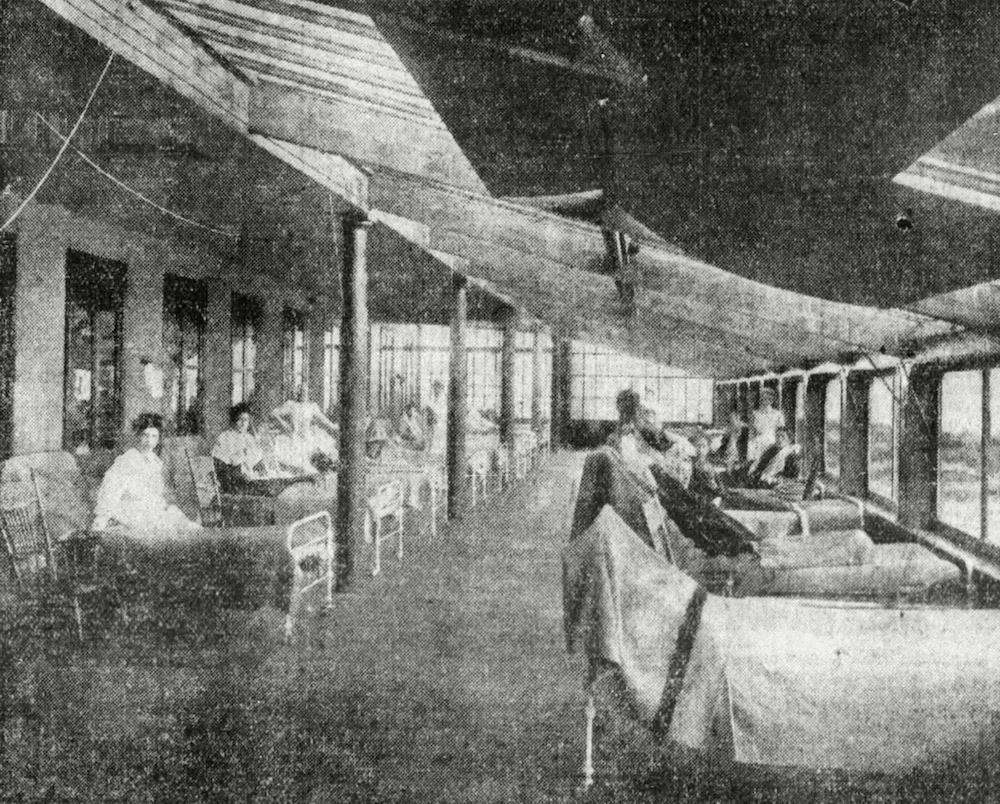
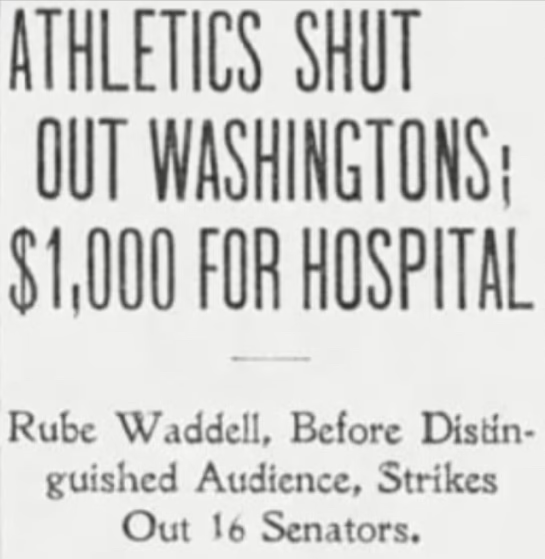
The following year “Mayor Jack” spearheaded a blockbusting baseball exhibition for the sanitorium. On October 8, 1906, at Hartford Base Ball Park, Connie Mack’s Philadelphia Athletics and their ace pitcher, Rube Waddell, faced the Washington Senators.
More than 4,000 fans attended for $0.50 each to watch Waddell strike out 16 batters in a two-hit, complete game shutout. The benefit game collected $1,250 for consumptives at Cedar Mountain – reportedly the cost of operating the hospital for a month.
Gunshanan’s outspoken personality and unlimited energy made him a compelling advocate to rally support and raise awareness in the fight against tuberculosis. In 1907, Governor Rollin Woodruff appointed Gunshanan as one of nine members to a state commission tasked with investigating the spread and prevention of the disease.
As State Commissioner, he drove public awareness campaigns in working class neighborhoods to destigmatize the disease and to encourage symptom reporting.
He traveled throughout Connecticut and New England giving speeches and advocating for mandatory case reporting. His work expedited a 1909 state law to enhance early detection and reduce urban transmission of tuberculosis.
The commission pushed for state-funded infrastructure which resulted in a $175,000 appropriation for three county tuberculosis hospitals and the establishment of five state sanatoria by the early 1910s.
In 1908, Gunshanan, and other state commissioners including Horace B. Cheney of Cheney Brothers Silk Manufacturing Company, boarded a train for Washington D.C. to present at the National Congress on Tuberculosis.
An impassioned Gunshanan touted Connecticut’s advancements in tubercular care at Wildwood Sanitorium, Gaylord Sanatorium in Wallingford and Undercliff Sanatorium in Meriden. Elected officials on Capitol Hill praised his plain mode of speaking and his idea to collect funds for family members of consumptive patients.
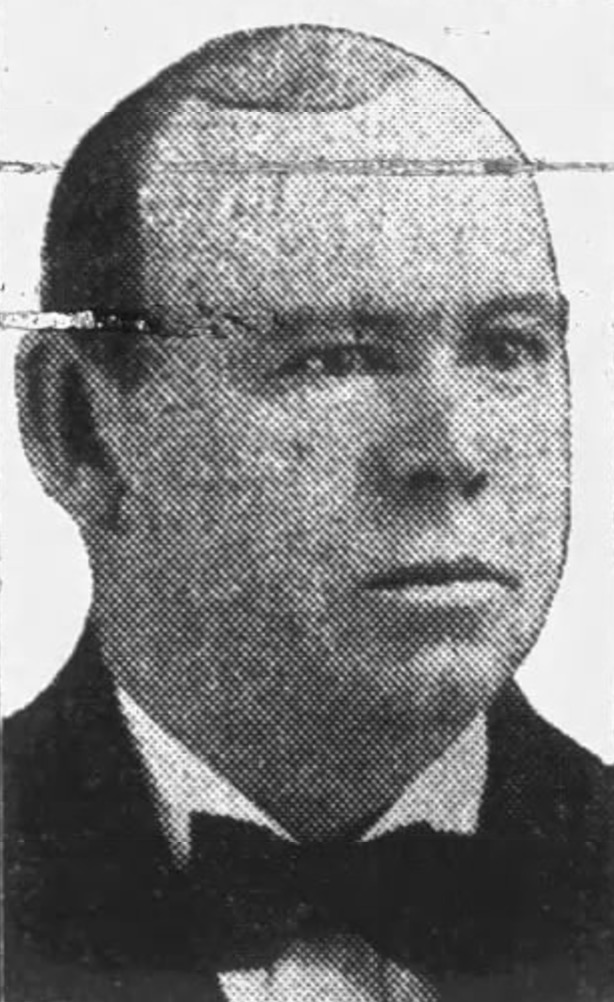
Gunshanan still found time for baseball. When the City Amateur Baseball League was formed, he was named the league president. Hartford’s top amateurs competed for outdoor exercise, bragging rights and a few professional contracts.
The Amateur League would evolve into the City Independent League and later, into the Hartford Twilight League, which has become the Greater Hartford Twilight Baseball League of today. His son, John F. Gunshanan, Jr., who managed a drug store, also coached in Hartford’s Catholic Baseball League.
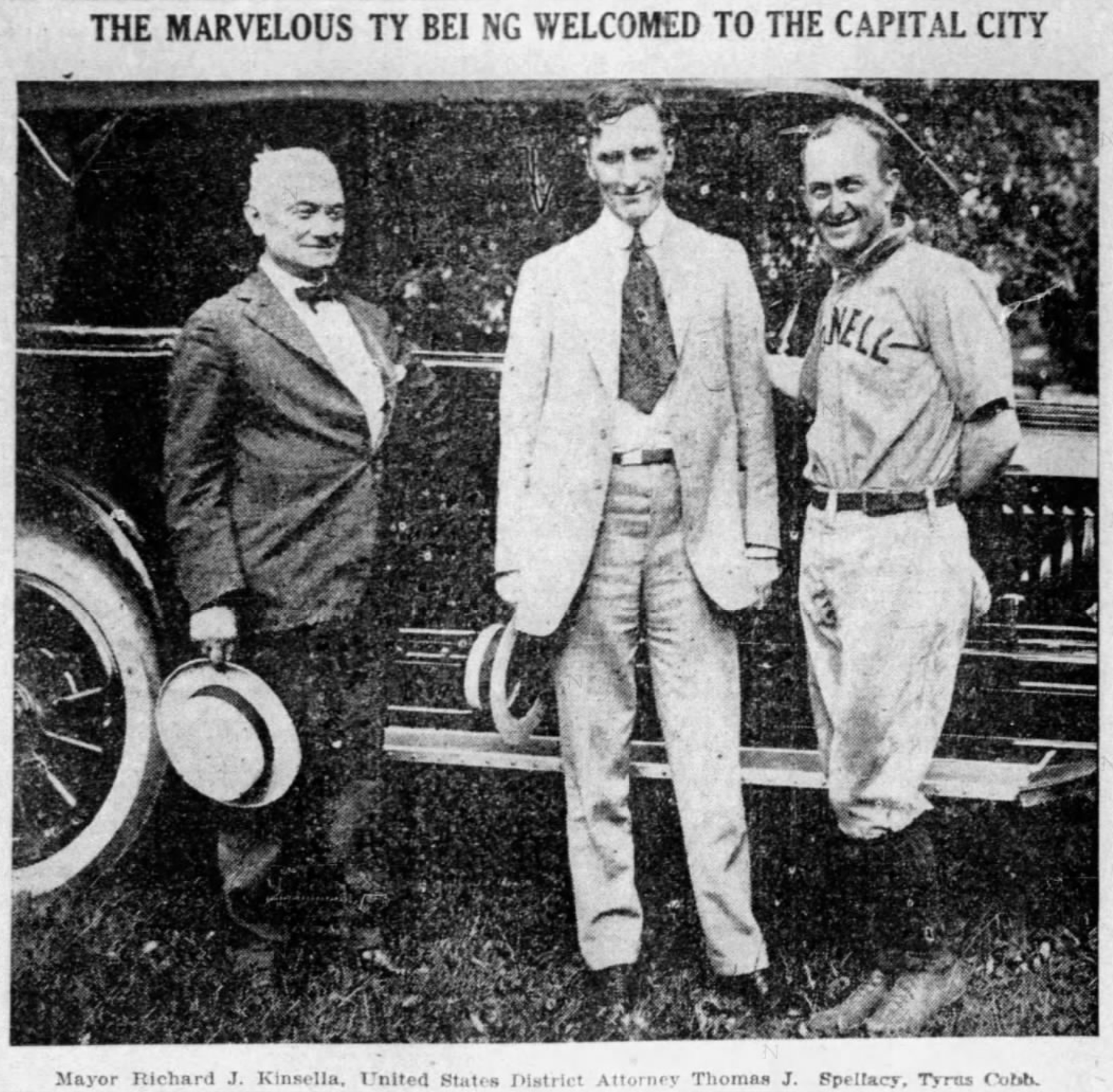
Amid World War I, Gunshanan acted as Hartford Soldiers Athletic Committee Chair. In 1918, he corresponded with Clark Griffith to organize benefit games featuring the 9-time Batting Title winner Ty Cobb.
6,000 fans watched as the St. Louis Browns defeated Cobb’s Detroit Tigers 3-1 at Wethersfield Avenue Grounds. The games collected $3,000 for Clark Griffith’s Bat and Ball Fund, which supplied U.S. Expeditionary Forces with baseball equipment to use on their base.
Gunshanan would be associated with baseball, tuberculosis and community organizing until his final days. State Commissioner Gunshanan helped lay the groundwork for a 22% reduction in the state tuberculosis death rate by 1920.
The Mayor of Frog Hollow fostered relationships and drove change with his words and actions. His backers adored his generosity and fighting spirit. Friends from his baseball days never forgot him either.
One day, he received a telegram at his home on Madison Street from an old friend, Connie Mack. The Tall Tactician had sent him two tickets for every 1929 World Series game in Philadelphia.
Instead of attending, Gunshanan raffled the tickets off to benefit Saint Francis Hospital. The following year, John F. Gunshanan, self-proclaimed baseballist, died on August 4, 1930 at 62 years old.
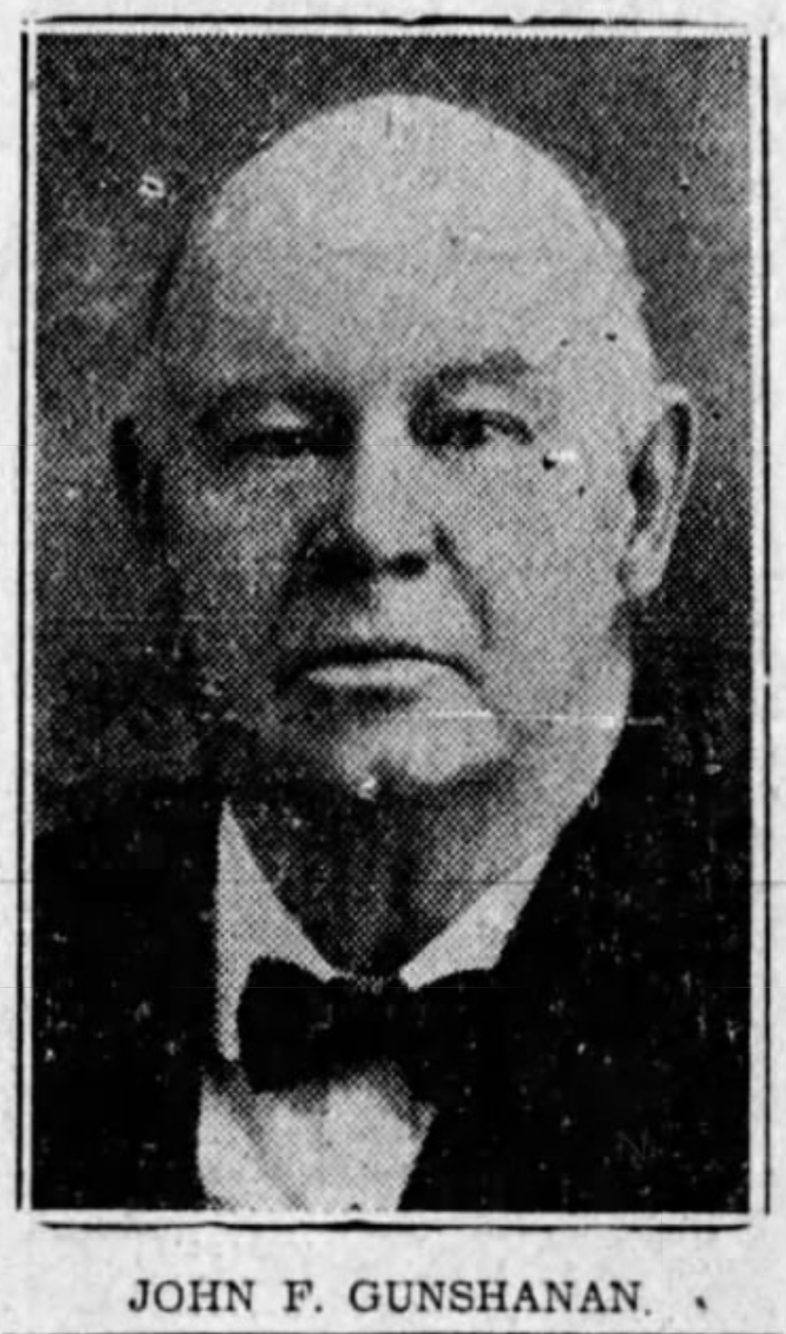
“He was a man of common school education, but if he lacked aught in the matter of culture he made up for it in earnestness, in a capacity to win the interest of others. He kept at it. He talked and labored with all sorts and conditions of men. He pleaded with legislators, with officials of various sorts, with trades unions and their leaders, with politicians and with priests until Connecticut, noted as a conservative commonwealth, established sanatoria for its consumptives. One likes to think that John Gunshanan lived to see the work in which he was interested established on a firm foundation.”
The Berkshire Eagle, August 7, 1930.
“He who labors diligently need never despair, for all things are accomplished by diligence and labor.”
Menander
Sources:
1. “Sanatorium Care for the Tubercular Poor in Hartford, 1900-1910” Digital Repository, Trinity College, 1993, digitalrepository.trincoll.edu/cgi/viewcontent.cgi?article=1003&context=grad. Accessed 26 Oct. 2024.
2. Stats Crew. “Minor League Baseball Statistics & History.” Stats Crew, www.statscrew.com/minorbaseball/stats/p-b0e2d807. Accessed 27 Oct. 2024.
3. “John Gunshanan Minor League Statistics & History.” Baseball-Reference, www.baseball-reference.com/register/player.fcgi?id=gunsha001joh. Accessed 27 Oct. 2024.
4. “Hartford Courant” Baseball-Reference, www.Newspapers.com. Accessed 21 Nov. 2024.
5. “The White Plague: Progressive Era Tuberculosis Treatments in Connecticut.” ConnecticutHistory.org, https://connecticuthistory.org/the-white-plague-progressive-era-tuberculosis-treatments-in-connecticut/. Accessed 7 Oct. 2025.