
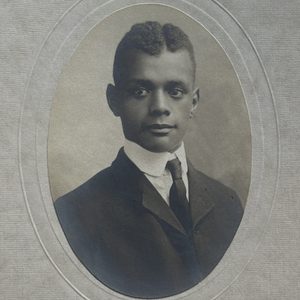
Tag: independent

Meriden’s Charles Earle, Deadball Era Trailblazer

Charles “Charlie” “Carl” Babcock Earle
Born: March 31, 1884. Meriden, Connecticut.
Died: February 21, 1972. Fort Myers, Florida.

Baseball history in the little state of Connecticut goes deeper than most of us realize. Cities the size of Meriden, New Britain, and Ansonia once fielded professional teams. Popular independent clubs and high school nines drew major crowds as baseball’s popularity peaked during the Deadball Era (1900-1920).

Nearly every town and major business had an official team, but today, Connecticut-based clubs and players of the Deadball Era are abstract references. We remember national heroes like Ty Cobb, Walter Johnson and the origins of Babe Ruth, but countless local names remain hidden and since once-household names have vanished from public memory, it’s up to current generations to retell their stories.

One of these players is Charles Babcock Earle, an athletic prodigy in baseball and football at Meriden High School, Class of 1904. A pitcher and outfielder of rare skill, Earle was often the only black kid on his team until adulthood. He became a known entity in New York and New Jersey baseball circles as a key player for the Brooklyn Royal Giants and the Grand Central Red Caps, but today he is largely unknown to the public. Only a handful of newspaper clippings, and a page on Seamheads Negro Leagues Database recall Earle’s prodigious and lengthy baseball career.
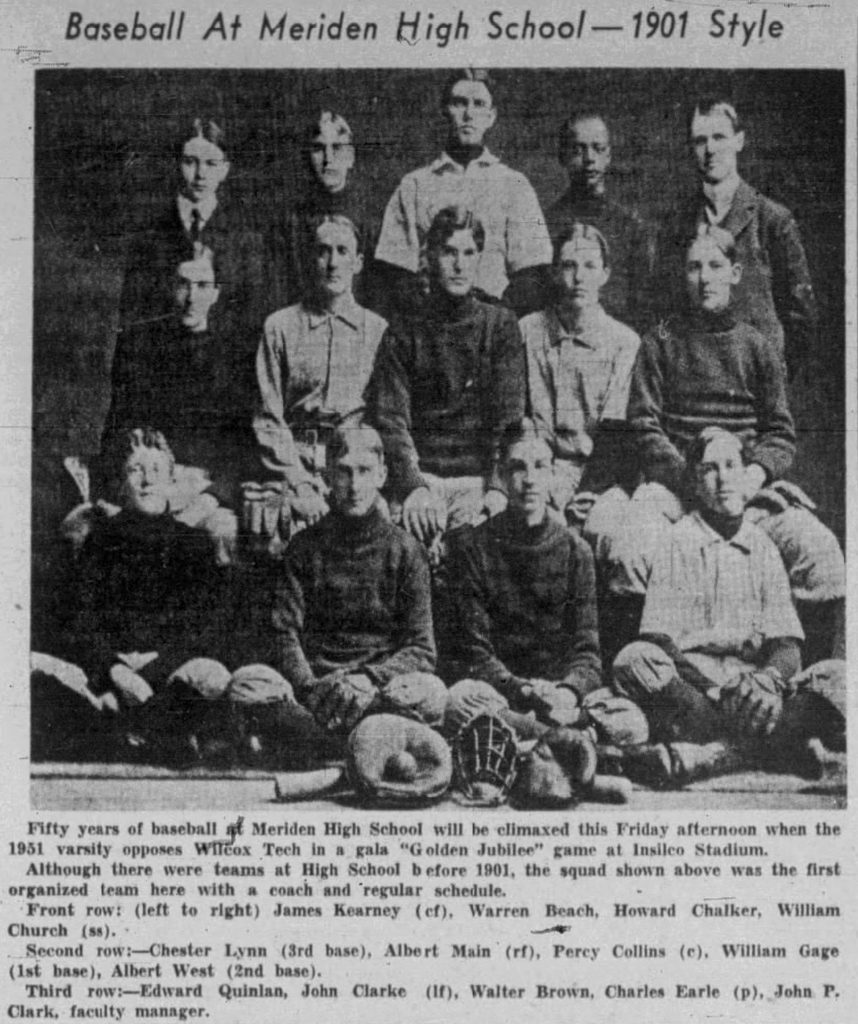
Meriden High School Varsity Baseball. Charles Earle, top row second from right, 1901.

Charles Earle was born in Meriden on March 31, 1884. One of his former teachers claimed the Earle’s were, “a fine family” who attended the Congregationalist Church and that the school, “had never seen another athlete quite like him.” By his teenage years, Charlie (sometimes Carl) was already the best all-around athlete in Meriden.

He won the “far high jump” at a Y.M.C.A. track meet, clearing four feet, eight inches. In his free-time, Earle was a caddie at Meriden Golf Club, where he won several published matches on the course. Local reporters lauded his rushing ability as a halfback on the gridiron, where his long runs decided football games. He played basketball with Jack Barry and Meriden often came out as victors. A two-way player on the baseball diamond, Earle looked ready for the next level, and it seems he chose baseball as a primary focus.
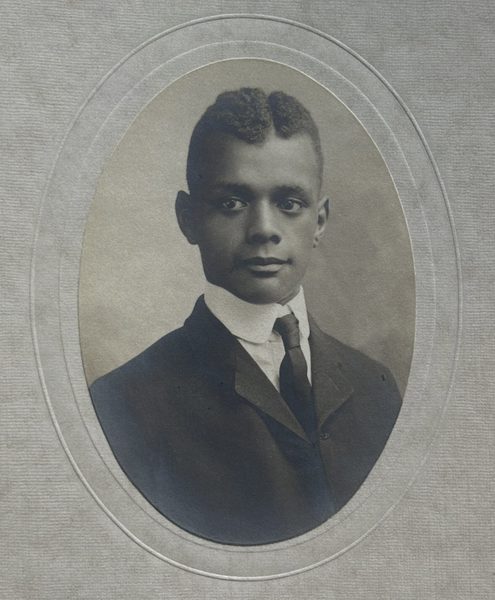
Charles Earle, 1904.

At eighteen, Earle had a dangerous bout of typhoid fever, but ill-health could not pull him away from the game. While making a full recovery in the hospital, he kept visitors busy with questions about his baseball team. During his high school career, Earle led Meriden to championships in baseball, basketball and football. His teammates repeatedly carried him off the field after victories and his classmates voted him best athlete and most popular student. On graduation night, Earle’s peers sang a chant in his honor, “First in football, first in baseball, first in the hearts of his classmates.”
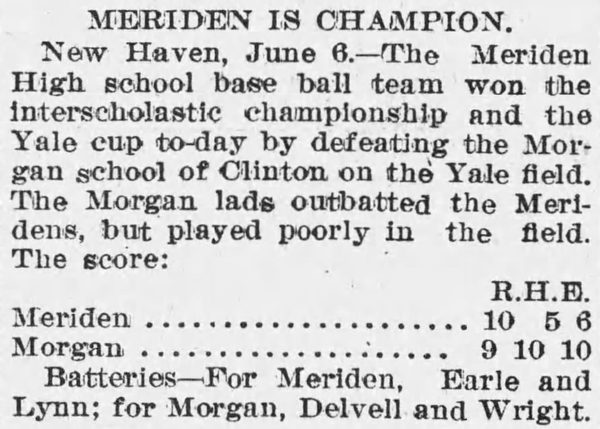
Meriden High School Baseball wins State Championship, 1903.

Then Earle briefly attended Wesleyan University in 1905, where his ability earned him a varsity spot. However his college days were cut short by a classic case of racial discrimination and exclusion. Southern schools on the spring training schedule refused to play against black players, and in turn, Earle decided to withdraw from school. That same year, Princeton University refused to play against two other Wesleyan players, Thomas Taylor, Jr. and John Smith (pictured below). Through a college-led vote, Wesleyan indefinitely banned minorities from their athletic clubs.
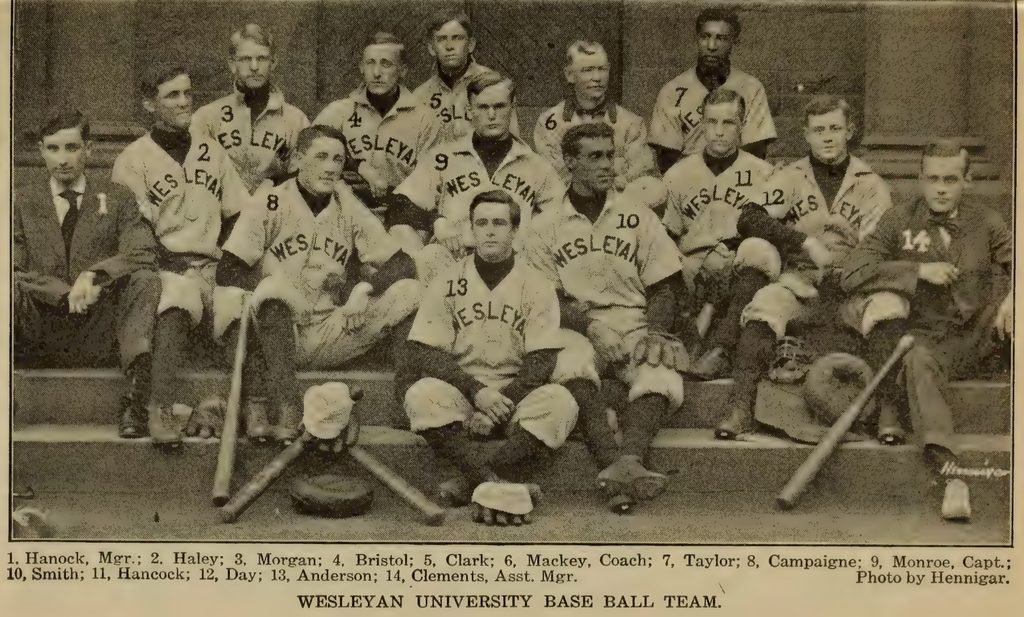
1905 Wesleyan Baseball Team (Charles Earle not pictured)

Perhaps he would have been a college star, but Earle found more baseball opportunities. He pitched multiple shutouts in Meriden’s 1905 City League with the Meriden Mohawks and he was then recruited to an alternate version of professional baseball. Earle began barnstorming with independent teams like the Philadelphia Quaker Giants and the Cuban Giants; teams comprised of all Black and Latin American players.

Within a few seasons, he had become captain of the Brooklyn Royal Giants. In 1909, Earle and the Royal Giants won what was reported as, “The championship of the colored professionals of New York.” Sportswriters gleamed in their reports of Earle. He was a top pitcher for the Giants, who could also swing a formidable bat. One newspaper declared him, “The Babe Ruth of the colored baseball world,” because he could pitch, hit, steal bases, and play any outfield position with great reliability.
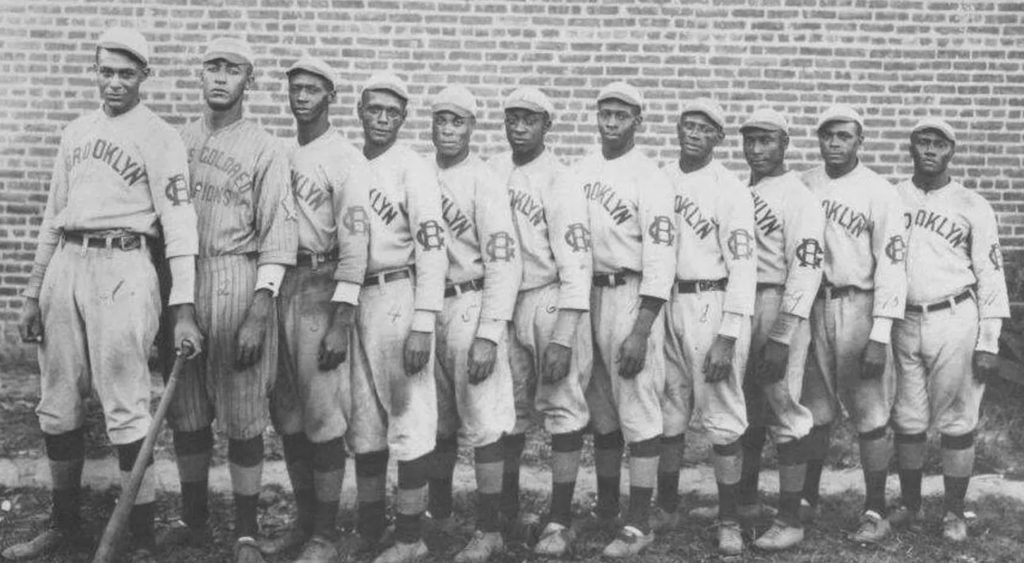
1917 Brooklyn Royal Giants (Earle fourth from left).

Earle had a joyful homecoming to Meriden in July of 1909, when his Brooklyn Royal Giants beat the Meriden Independents 17–2 at Parker Field. He played center field and hurled the last two innings, striking out three and allowing one hit. In five at-bats he scored four runs, collected three hits, doubled, and stole two bases. Between Friday and Saturday Earle spent so much time shaking hands that the paper felt obliged to say his arm was none the worse. In the eighth inning, the game was halted and Earle was presented with an engraved sterling silver-handled umbrella.

He clearly had friends in Meriden, but he decided to take a job in New York City at Grand Central Station as a porter. There he joined the terminal’s ball club, Grand Central Red Caps, and became player-manager. On June 29, 1918, The Brooklyn Daily Times previewed “Earle’s Red Caps” at Ridgewood Grounds and called them, “one of the strongest traveling colored clubs.” The following year a Times Union box score listed “Earle’s Red Caps” as he played center field, went 3-for-4 with a run, a sacrifice, and a stolen base. For the Red Caps, he was the main attraction.
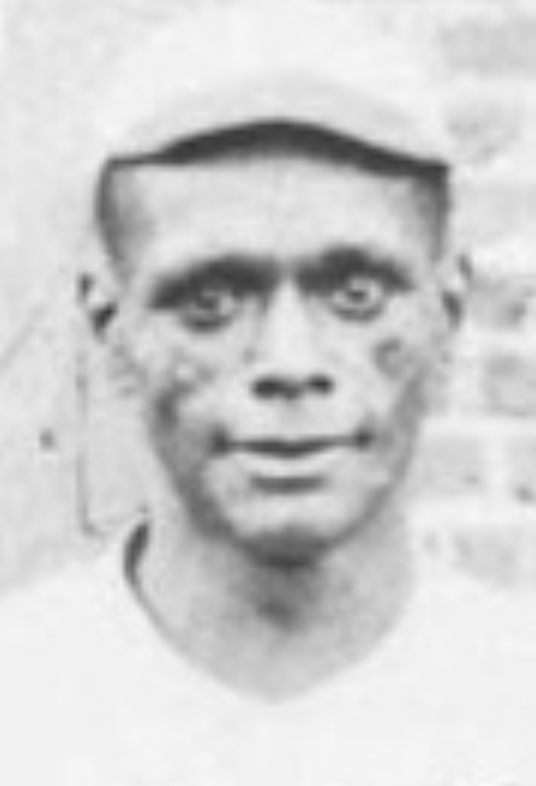
Charles Earle

Earle went on to star for the Atlantic City Bacharach Giants and the McConnell Colored Giants. He was competing decades before the Negro National League was organized in 1920. Many of the best “colored clubs” traveled by train from city to city to earn pay from exhibition games and independent matchups. It was unchartered territory for players of minority backgrounds, and Earle was one many important pioneers of the era. He held his own with established players like Louis Santop, Grant “Home Run” Johnson, and Lefty Harvey, who were also banned from white-organized baseball.

In the 1940s a Meriden journalist tracked Earle down at Grand Central Terminal, where the once-powerful athlete was still working as a porter. The writer found a soft-spoken, white-haired man of average height who still remembered Meriden fondly. When the paper published praise of his old exploits, Earle wrote back that the recognition, “Made my heart bubble over with joy.”

After his playing days he worked as a Red Cap porter at Grand Central Terminal in New York and later taught and coached at Johnson C. Smith University in Charlotte, North Carolina. Meriden never forgot the ability that first made him famous. Local writers into the 1940s insisted Earle would have been a big leaguer. Charles Earle died in Fort Myers, Florida, on February 21, 1972, but the memory of his greatness remains.


Charles Earle’s Wikipedia page: https://en.wikipedia.org/wiki/Charles_Earle

Works Cited

“At Athletic Meet.” Meriden Morning Record, Mar. 1904.

Baseball-Reference. “Charles Earle.” www.baseball-reference.com/register/player.fcgi?id=earle-000cha.

“Charles Earle Getting Better.” Meriden Daily Journal, 4 Oct. 1902.

“Charlie Earle’s Team at Reopening at Ridgewood.” Brooklyn Daily Times, 29 June 1918.

“City League Notes.” Record-Journal [Meriden], 1909.

“Cubans Announce Line-Up for Tomorrow’s Contest.” Newark Evening Star, 8 May 1914.

“High School Lost Game with Wesleyan.” Meriden Morning Record, 1905.

“Meriden High Team of ’03 Has Loomed Big in Baseball History.” Springfield Evening Union, 2 Nov. 1911, p. 6.

Seamheads Negro Leagues Database. “Charles Earle.” www.seamheads.com/NegroLgs/player.php?playerID=earle01cha.

Untitled recollection of Carl Earle. The Journal [Meriden], 1940–1946.

Jim Schult Named to D3 Team of the Decade

Schult, an Eastern Connecticut Baseball Alum and GHTBL Champion.

WILLIMANTIC, Conn. – The No. 5 stitched to Jim Schult’s uniform as a four-year member of the Eastern Connecticut State University baseball program may very well have stood for ‘5-tool’, as in ‘complete’ player.

This past week, Schult — voted the Division III National Player-of-the-Year in 2011 — represents Eastern on D3baseball.com‘s second all-decade team this century, the 2010s All-Decade Team.

An honorable mention selection at the utility position, the Wappingers Falls, NY native was one of 82 players named to the team, which also includes first, second and third teams which were voted upon by D3baseball.com staff and their colleagues at The Podcast About Division III Baseball. Players had to have played at least two seasons to be eligible for consideration in the decade.

“It’s definitely a big honor to be on this (all-decade) team… it’s nice to be thought of,” admitted Schult, when reached by telephone Friday afternoon.

Eastern, a four-time NCAA Division III national champion, was represented on the first all-decade team of the century (released in 2010) by three players: first-teamers Ryan DiPietro, a left-handed pitcher, and utility player Shawn Gilblair and second-teamer Dwight Wildman, an outfielder.

During their careers, all four of Eastern’s all-decade selections were named Player or Pitcher-of-the-Year by either the American Baseball Coaches’ Association (ABCA) or National College Association (NCBWA), or both. Schult was the only one of the four named to both.

Schult (right) in an elimination game of the 2009 NCAA New England Regionals at the Eastern Baseball Stadium, with battery mate Steve Cammuso stifled Husson University to 7 hits and the Warriors advanced to the championship. The pair also combined for 5 hits, 4 runs scored and 3 runs. Schult’s  2-out HR set the tempo for the 18-3 win.

In his four-year career (2008-11) as a right-handed pitcher, outfielder and DH, the six-foot, 200-pound Schult led the Warriors to four straight NCAA tournaments, at least a share of two Little East Conference regular-season championships and one LEC tournament title, and a 72.7 winning percentage. He batted third in the order in each of his final three years — playing primarily right field — until moving to DH as a senior tri-captain.

As a first-team ABCA All-America and National Player-of-the-Year in 2011, Schult set personal career-highs and led his team in most every statistical category. At the plate, he batted .392 with 76 hits (currently tied for tenth all-time in a season) while starting all 47 games for the 34-13 Warriors. He stole 20 of 21 bases that year with 138 total bases (tied for fifth all-time in a season) and 64 RBI (sixth) and his combined total of 120 RBI and runs scored currently equals the sixth-most in a season in program history. On the mound, he was 10-1 with 92 strikeouts in 87 innings with a 3.31 ERA., his only loss coming in one of his two relief appearances.

During that final season, Schult was credited with four of the staff’s five complete games, his final one coming in a five-hitter with 12 strikeouts in a 2-0 win – the only shutout of his career — over the College of Brockport in the NCAA regional tournament opener in the final pitching appearance of his career. It was that game, where he walked five batters and hit one and stranded ten runners – seven in scoring position —  that Schult feels defined his career. “I think if you had to sum me up in a single game, I think that game would probably tell you what you needed to know about me. I didn’t have great stuff that day — I think I threw about 165 pitches — but I was able to get out of (jams nearly every inning).”

A third baseman at John Jay High School in Hopewell Junction, New York, Jim Schult worked hard to make himself a solid right fielder at Eastern, 2017.

In his career, Schult threw complete games in both of his regional tournament starts, also going the distance in an elimination-game win against Husson University in the 2009 regional that moved the Warriors to within a win of advancing into the championship round.

In a 20-13 win over the University of Chicago in Chandler, AZ as a sophomore in 2009, he became the sixth player in program history to hit for the cycle (tripling in the ninth inning to complete the feat), tying program game records in the process with six hits and six runs scored.

A pitcher and third baseman (shortstop was taken by future major league Gold Glover Joe Panik) in high school, Schult was sent to right field on the first day of his first fall season at Eastern to replace a teammate who failed to appear. In that game, hit a home run in his first fall at-bat, and he spent the majority of his career – when not pitching — at that position. After struggling defensively as a freshman, he spent the summer playing center field in a local league at home, honing his craft under the tutelage of Negro League legend Willie Mack. He committed only one outfield error as a sophomore and subsequently led the team in outfield assists each season thereafter.

Schult says that he is most proud of his teams’ three LEC titles and the Warriors’ prodigious power-hitting teams of 2009 and 2010. The 2009 team batted an astounding .355, won its first 13 games, was ranked No. 1 nationally for three consecutive weeks, carried a 14-game hitting streak into the NCAA tournament, and finished as the national leader in doubles and was second in runs and hits. Those two teams set season records in six offensive categories that remain today.

“We stepped on the field with so much confidence, knowing that we were going to do whatever we needed to do to win that game from an offensive standpoint,” Schult recalls of his sophomore and junior seasons.  

A .371 career hitter, Schult today ranks among the program’s all-time career Top Ten in 12 offensive categories, including second in doubles (63), third in total bases (417) and fourth in runs (199) and RBI (189). As a pitcher, he fell one win shy of being one of 13 hurlers in program history with 20 career wins. He finished 19-2 with two saves and a 3.24 ERA in 203.0 innings. Among pitchers with a minimum of ten career decisions, his career winning percentage of 90.5 ranks sixth all-time.

Schult says that he turned down several Division I offers out of high school because Eastern afforded him the opportunity to play every day, as well as pitch.

While freshmen rarely cracked the starting lineup on veteran teams stocked with All-America players under Hall of Fame coach Bill Holowaty, Schult was an exception. Appearing in 40 of 49 games in 2008, he batted .301 with 23 RBI and 30 runs scored, then blossomed as a sophomore by batting .388 with 122 total bases and 58 runs score. “I always thought of  myself as a competitor and  somebody who would rise to that level of competition,” says Schult of his fast start.

Schult believes that a series of adjustments throughout his career were the keys to his success, from learning the nuances of the outfield and being able to hit a curveball after his freshman year, to mastering the art of opposite-field hitting and to learning to ‘pull the trigger’ early in the count as his career progressed. “Every time something got exposed with me, I spent the summer and the winter working on that weakness,” he recalls. “I think, really what it was, was just being willing to learn.”

Over his final three seasons, Jim Schult stole 35 of 37 bases, 20 coming in 21 tries in 2011.

In addition to his baseball accomplishments, Schult was a two-time CoSIDA Academic District I selection and Eastern Outstanding Scholar-Athlete qualifier in both years of eligibility and LEC All-Academic qualifier in all three seasons of eligibility.

Schult grew up in a baseball family, with his grandfather, Art (Dutch) Schult, enjoying a five-year MLB playing career with four organizations in the 1950s and 60s as a 1949 New York Yankees signee, and his father, Jim, being a 33rd-round MLB draft pick of the Texas Rangers as a power-hitting outfielder in 1981. Schult’s younger brother, Jeff, played four seasons at Western New England University as a centerfielder and DH, earning all-region and all-conference honors before graduating in 2014. Like Jim, he was also a CoSIDA academic all-district selection.

After earning his B.S. Degree in Business Administration from Eastern in 2011, Schult spent three summers playing in independent leagues and a winter season as one of the top pitchers in the Australian Baseball League with the Brisbane Bandits before retiring after tearing his UCL and undergoing Tommy John surgery.  In the summer of 2019, he came out of retirement at the request of Holowaty – the current president of the Greater Hartford Twilight League–  to resuscitate a struggling East Hartford franchise. As a player-coach, he helped lead the Jets to the GHTL championship this past summer.

In 2018, Schult earned a B.S. Degree in Accounting from Marist College and is employed at Blum Shapiro as a senior consultant, and resides in Simsbury.

Jim Schult (center) and his teammates had plenty to celebrate after he scored the winning run when the East Hartford Jets won the GHTBL title this past summer.

ARTICLE FROM GOWARRIORSATHLETICS.COM